
search
.png)
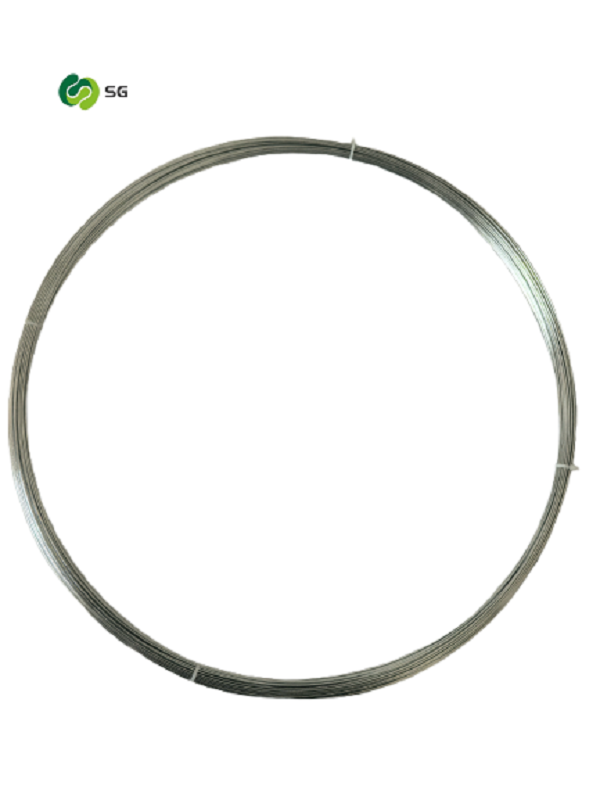
Electric Galvanized Wire
.png "5 (4).png")
.jpg "1 (17).jpg")
Introduction to Electro-Galvanized Steel Wire
Electro-galvanized steel wire (cold-galvanized wire) is a metallic product that forms a zinc layer on low-carbon steel wire through an electrolytic process. It combines corrosion resistance and decorative properties, making it widely used in construction, crafts, packaging, and industrial manufacturing. The core technology involves using electric current to uniformly deposit zinc ions from a zinc salt solution onto the steel wire surface, creating a dense coating that enhances material durability and aesthetics.
Production Process
The manufacturing process of electro-galvanized steel wire includes: high-quality low-carbon steel wire rods are drawn into shape, pickled to remove rust, annealed at high temperatures to soften the wire, electro-galvanized in an electrolytic cell where zinc ions are reduced to metallic zinc under current, passivated to enhance corrosion resistance, and finally cleaned and dried. Key steps involve surface pretreatment (ensuring zinc adhesion), precise electroplating control (adjusting current and solution concentration), and post-treatment (improving corrosion resistance and appearance).
Product Features
Advantages: Uniform and dense zinc layers ensure long indoor service life; smooth, shiny surfaces (silver-white or colored after passivation) meet decorative needs; lightweight and eco-friendly coatings minimize environmental impact; high ductility allows bending, weaving, and other forming operations.
Limitations: Zinc layers (3–15μm) are thinner than hot-dip galvanizing (45–300μm), leading to weaker outdoor corrosion resistance and potential rusting; higher production energy consumption may increase maintenance costs.
Applications
Construction: Used for scaffolding bundling and rebar fixing (commonly 22# wire, 0.71mm diameter) to ensure structural stability.
Crafts: Woven wire mesh and decorations requiring uniform zinc layers without breaks for both aesthetics and practicality.
Packaging & Agriculture: Product strap and fence construction, balancing strength and corrosion resistance for outdoor use.
Industrial Equipment: Machinery parts and cable reinforcement to enhance component corrosion resistance.
Specifications
Material: Q195 low-carbon steel for flexibility and strength.
Diameter Range: 0.7mm–5.0mm, with common sizes including 12#, 14#, and 22#.
Tensile Strength: Approximately 450–500MPa, varying by specification.
Zinc Coating: 3–15μm standard, with special processes achieving up to 300g/m².
Electro-galvanized steel wire (cold-galvanized wire) is a metallic product that forms a zinc layer on low-carbon steel wire through an electrolytic process. It combines corrosion resistance and decorative properties, making it widely used in construction, crafts, packaging, and industrial manufacturing. The core technology involves using electric current to uniformly deposit zinc ions from a zinc salt solution onto the steel wire surface, creating a dense coating that enhances material durability and aesthetics.
Production Process
The manufacturing process of electro-galvanized steel wire includes: high-quality low-carbon steel wire rods are drawn into shape, pickled to remove rust, annealed at high temperatures to soften the wire, electro-galvanized in an electrolytic cell where zinc ions are reduced to metallic zinc under current, passivated to enhance corrosion resistance, and finally cleaned and dried. Key steps involve surface pretreatment (ensuring zinc adhesion), precise electroplating control (adjusting current and solution concentration), and post-treatment (improving corrosion resistance and appearance).
Product Features
Advantages: Uniform and dense zinc layers ensure long indoor service life; smooth, shiny surfaces (silver-white or colored after passivation) meet decorative needs; lightweight and eco-friendly coatings minimize environmental impact; high ductility allows bending, weaving, and other forming operations.
Limitations: Zinc layers (3–15μm) are thinner than hot-dip galvanizing (45–300μm), leading to weaker outdoor corrosion resistance and potential rusting; higher production energy consumption may increase maintenance costs.
Applications
Construction: Used for scaffolding bundling and rebar fixing (commonly 22# wire, 0.71mm diameter) to ensure structural stability.
Crafts: Woven wire mesh and decorations requiring uniform zinc layers without breaks for both aesthetics and practicality.
Packaging & Agriculture: Product strap and fence construction, balancing strength and corrosion resistance for outdoor use.
Industrial Equipment: Machinery parts and cable reinforcement to enhance component corrosion resistance.
Specifications
Material: Q195 low-carbon steel for flexibility and strength.
Diameter Range: 0.7mm–5.0mm, with common sizes including 12#, 14#, and 22#.
Tensile Strength: Approximately 450–500MPa, varying by specification.
Zinc Coating: 3–15μm standard, with special processes achieving up to 300g/m².
Product Details of Electro-Galvanized Steel Wire
1. Product Definition
Electro-galvanized steel wire (cold-galvanized wire) is a metal product formed by depositing a zinc layer on low-carbon steel wire through an electrolytic process. It offers dual functions of corrosion resistance and decoration. The core of this technology is to use electric current to evenly attach zinc ions to the steel wire surface, forming a dense coating.
2. Production Process
3. Product Characteristics
4. Application Fields
5. Specifications
6. Differences from Hot-Dip Galvanized Wire
7. Precautions
8. Reference Standards
prev:
Black Annealed Wire
next:
Garden Tie Wire

Submit
Home About Us Products Contact Us
Tel: +86 15830221628
whatsapp: +86 15830221628
E-mail: kevin@hbsungrand.com
Address:Liusu Industrial Zone, Liqingu Town, Dingzhou City, Hebei Province, China