
search
.png)
Black Annealed Wire
Introduction to Black Annealed Wire
Definition
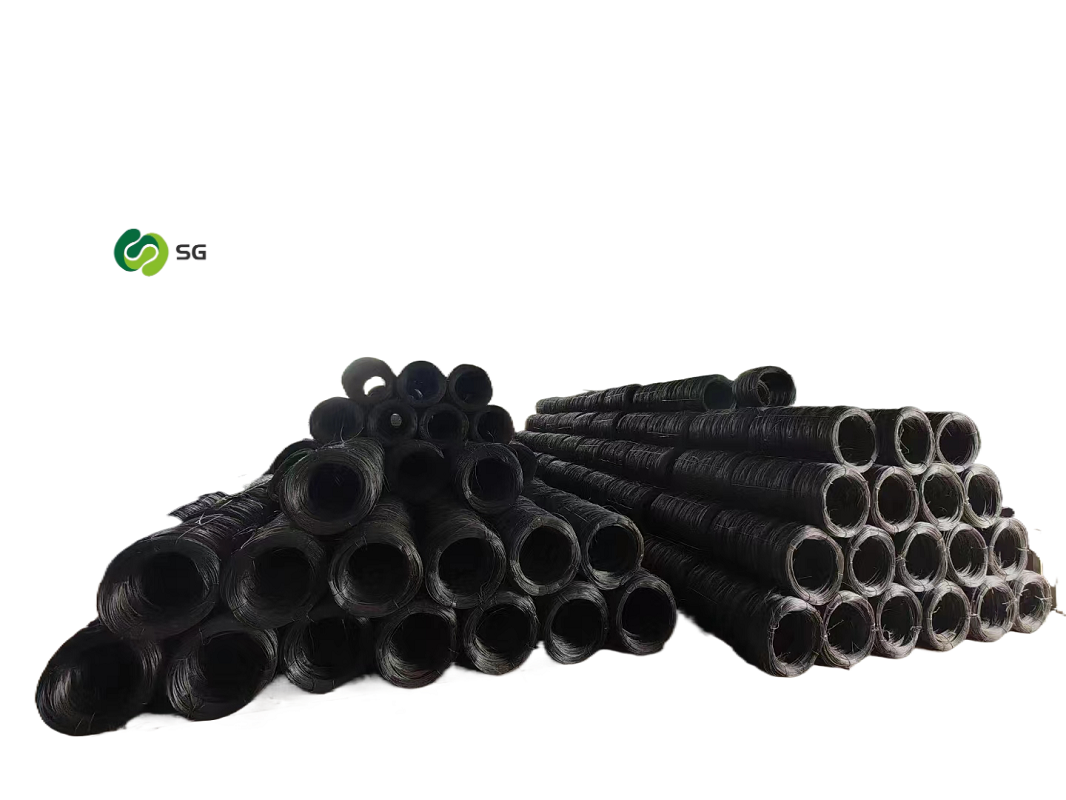
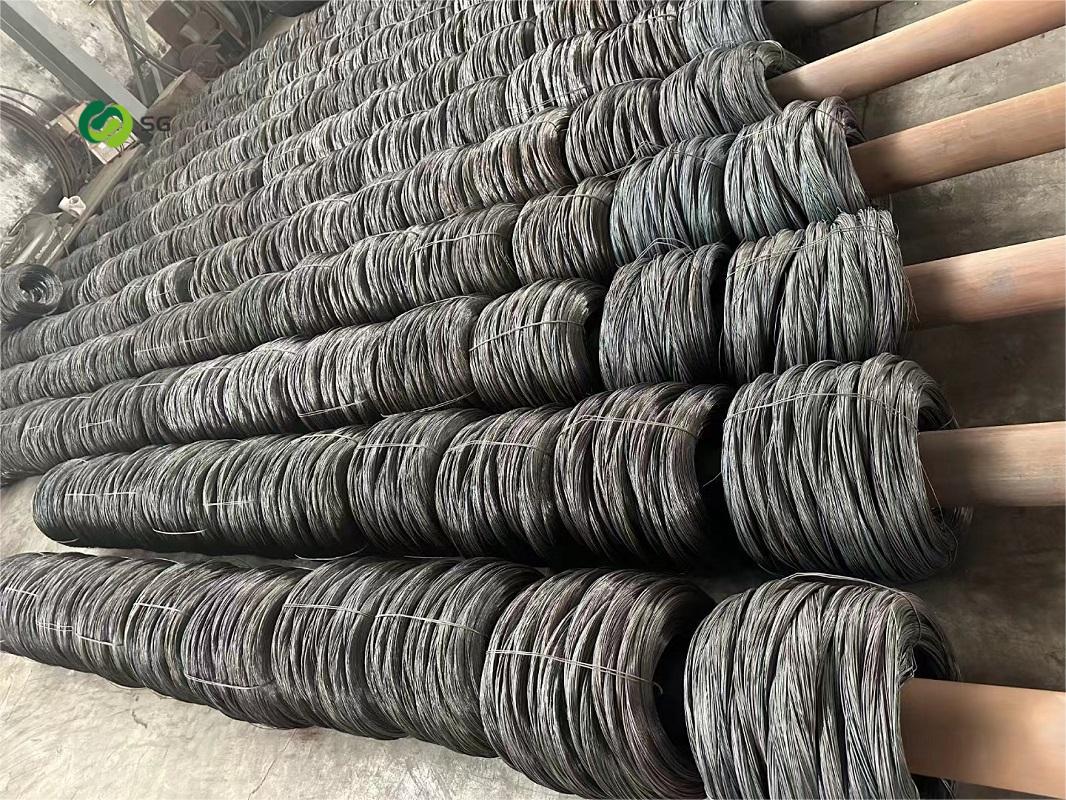
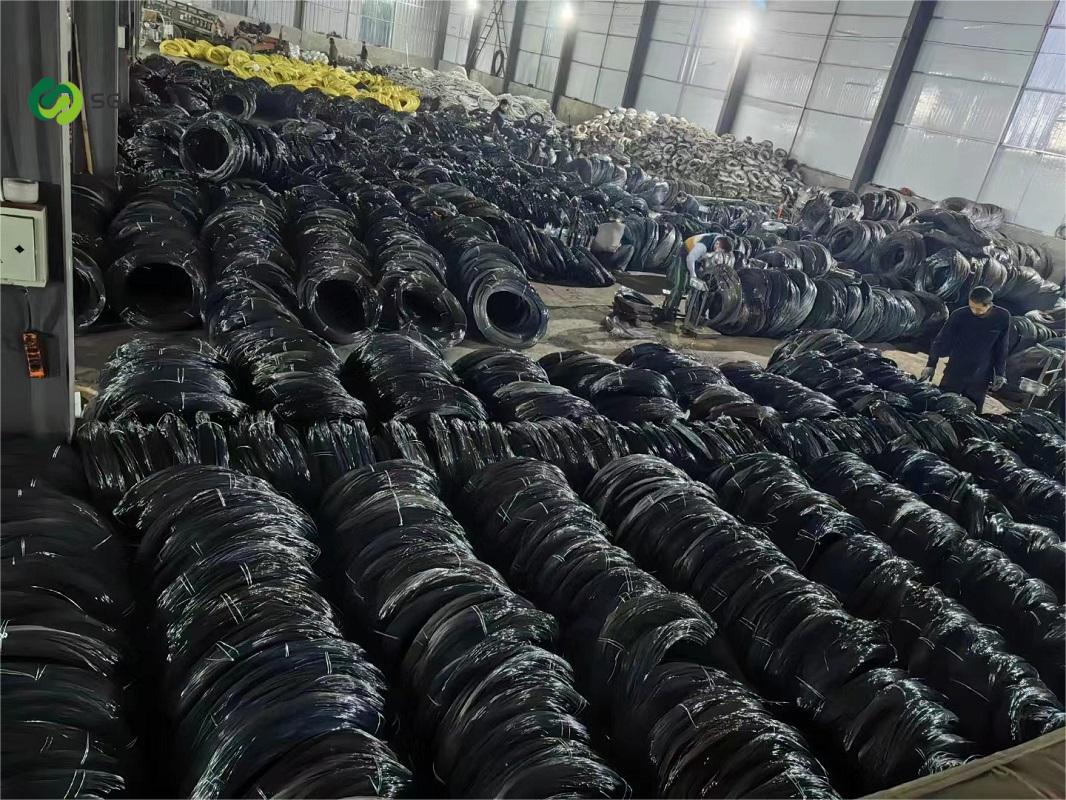
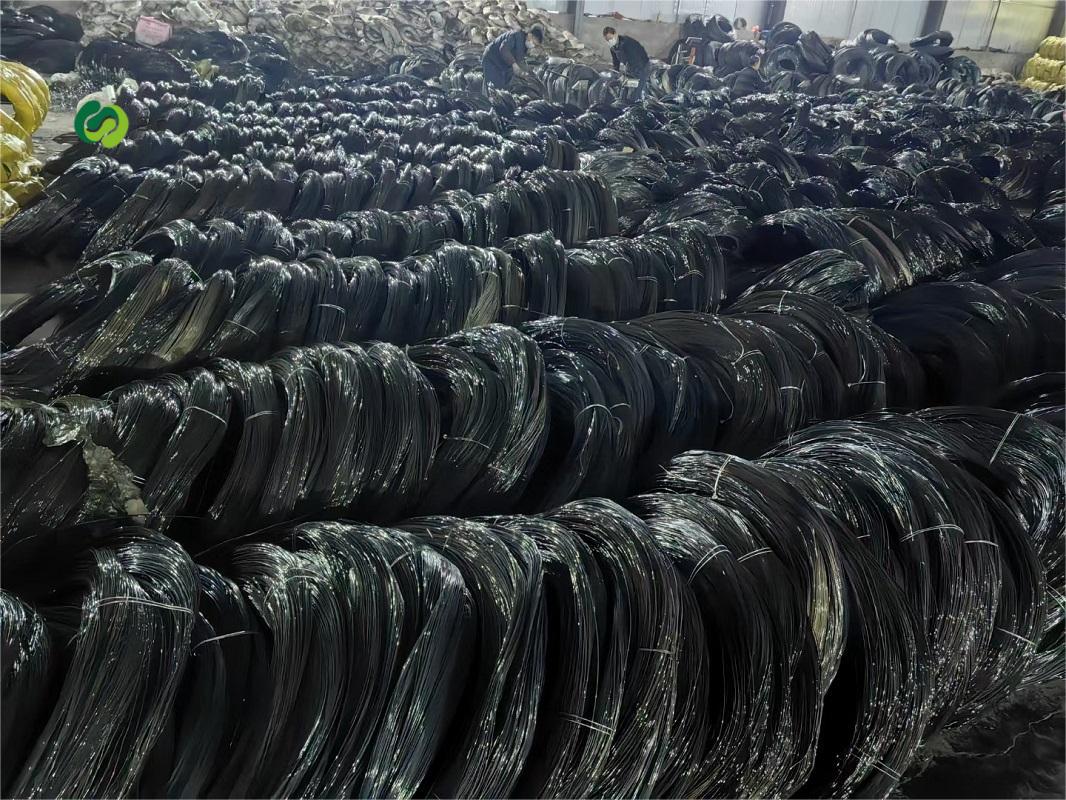
Black annealed wire is a type of low-carbon steel wire processed through an annealing technique. By heating it to high temperatures and cooling it slowly, the wire’s hardness is reduced while its flexibility is enhanced, making it suitable for applications requiring repeated bending or binding.
Manufacturing Process
Using Q195 high-quality low-carbon steel coils as raw materials, the wire is drawn into various diameters. It then undergoes annealing in a furnace or via a heat-pipe annealing process, where controlled cooling restores its plasticity, resulting in a soft and uniform black annealed wire.
Key Features
High Flexibility: Soft and easy to bend without breaking after annealing.
Uniform Color: Surface unfold dark black or grayish-black with minimal aberration.
Good Elasticity: Can withstand moderate tensile forces for secure binding.
Versatile Sizes: Diameters range from 0.17mm to 4.5mm (wire gauge 5#-38#), with customizable options.
Applications
Construction: Rebar tying, scaffold fixation, concrete formwork reinforcement.
Industry: Mine support, chemical equipment bundled,welded mesh, and processing of crafts.
Daily Use: Gardening binding,packaging sealing, temporary fixation.
Specifications & Packaging
Wire Diameters: Available in SWG (British Standard), BWG (Birmingham Wire Gauge), and Metric systems (e.g., 3.5mm/10#, 2.8mm/12#).
Packaging: Inner plastic and outer jute/woven bag wrapping, with bundle weights of 50-1000kg. Small rolls (e.g., 2kg/roll) and custom packaging are also supported.
Chemical Composition & Properties
Material: Q195 low-carbon steel (C: 0.06-0.12%, Mn: 0.25-0.50%, low S/P impurities).
Mechanical Properties: Tensile strength 315-430MPa, yield strength 195MPa, elongation ≥33%, balancing strength and ductility.
Differences from Other Wires
Cold-Drawn Wire: Smooth, glossy surface; hard and brittle; used for welded mesh or precision parts.
Galvanized Wire: Zinc-coated for rust resistance; slightly less flexible; suitable for outdoor/wet environments.
Advantages
Cost-effective for large-scale binding needs.
Readily customizable for secondary processing (e.g., plastic coating, U-shaped wire cutting).
Application Example
In construction, black annealed wire ties rebar cages. Its flexibility reduces installation difficulty, improving construction efficiency, while the annealing process enhances fatigue resistance for long-term stability.
Definition
Black annealed wire is a type of low-carbon steel wire processed through an annealing technique. By heating it to high temperatures and cooling it slowly, the wire’s hardness is reduced while its flexibility is enhanced, making it suitable for applications requiring repeated bending or binding.
Manufacturing Process
Using Q195 high-quality low-carbon steel coils as raw materials, the wire is drawn into various diameters. It then undergoes annealing in a furnace or via a heat-pipe annealing process, where controlled cooling restores its plasticity, resulting in a soft and uniform black annealed wire.
Key Features
High Flexibility: Soft and easy to bend without breaking after annealing.
Uniform Color: Surface unfold dark black or grayish-black with minimal aberration.
Good Elasticity: Can withstand moderate tensile forces for secure binding.
Versatile Sizes: Diameters range from 0.17mm to 4.5mm (wire gauge 5#-38#), with customizable options.
Applications
Construction: Rebar tying, scaffold fixation, concrete formwork reinforcement.
Industry: Mine support, chemical equipment bundled,welded mesh, and processing of crafts.
Daily Use: Gardening binding,packaging sealing, temporary fixation.
Specifications & Packaging
Wire Diameters: Available in SWG (British Standard), BWG (Birmingham Wire Gauge), and Metric systems (e.g., 3.5mm/10#, 2.8mm/12#).
Packaging: Inner plastic and outer jute/woven bag wrapping, with bundle weights of 50-1000kg. Small rolls (e.g., 2kg/roll) and custom packaging are also supported.
Chemical Composition & Properties
Material: Q195 low-carbon steel (C: 0.06-0.12%, Mn: 0.25-0.50%, low S/P impurities).
Mechanical Properties: Tensile strength 315-430MPa, yield strength 195MPa, elongation ≥33%, balancing strength and ductility.
Differences from Other Wires
Cold-Drawn Wire: Smooth, glossy surface; hard and brittle; used for welded mesh or precision parts.
Galvanized Wire: Zinc-coated for rust resistance; slightly less flexible; suitable for outdoor/wet environments.
Advantages
Cost-effective for large-scale binding needs.
Readily customizable for secondary processing (e.g., plastic coating, U-shaped wire cutting).
Application Example
In construction, black annealed wire ties rebar cages. Its flexibility reduces installation difficulty, improving construction efficiency, while the annealing process enhances fatigue resistance for long-term stability.
Detailed Product Information of Black Annealed Wire
1. Product Definition & Core Process
2. Technical Parameters & Specifications
3. Product Features & Advantages
4. Typical Application Scenarios
5. Packaging & Transportation
6. Quality Control & Certifications
7. FAQs
next:
Electric Galvanized Wire

Submit
Home About Us Products Contact Us
Tel: +86 15830221628
whatsapp: +86 15830221628
E-mail: kevin@hbsungrand.com
Address:Liusu Industrial Zone, Liqingu Town, Dingzhou City, Hebei Province, China